
About Agistri
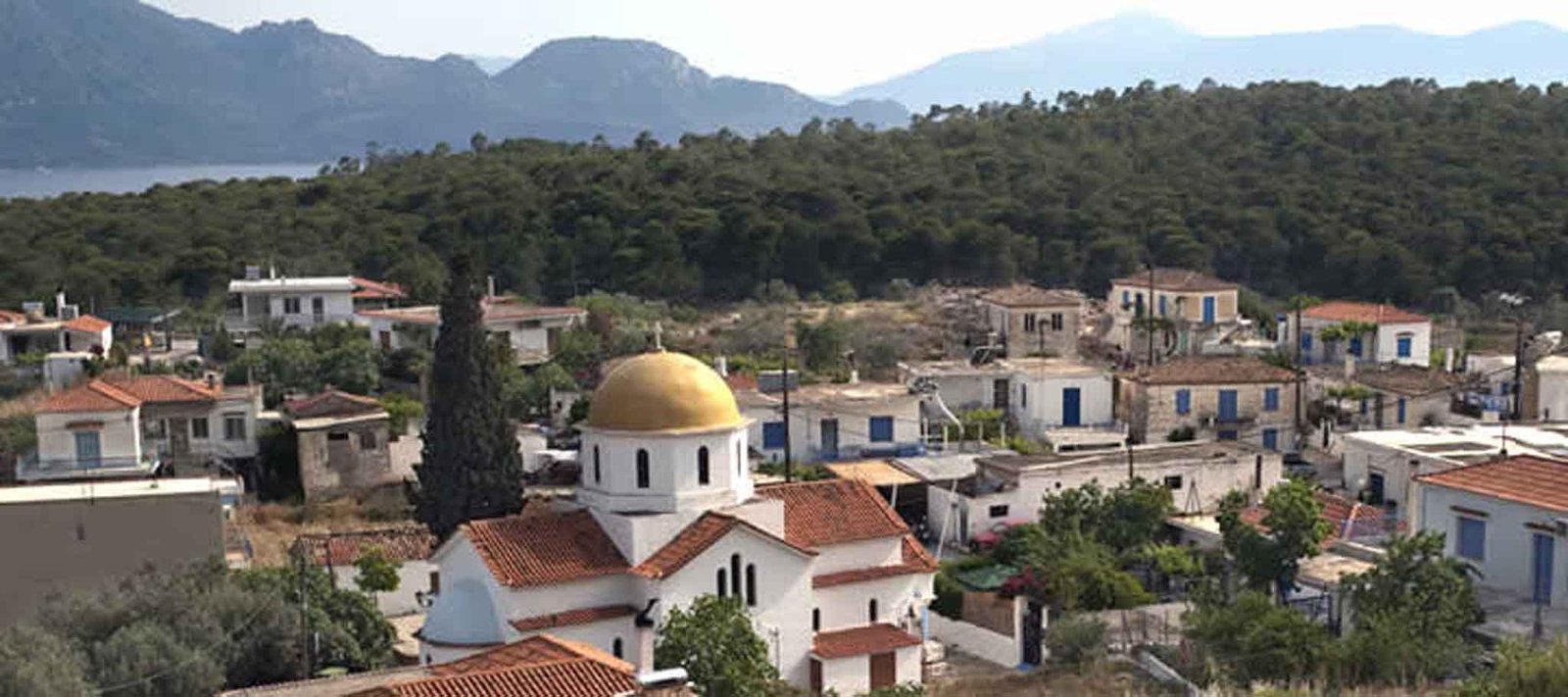
Agistri is a compact island in the Saronic Gulf with a simple geography and a strong sense of place: pine forest, short distances, and two arrival points that make it easy to approach even on a first visit.
Geography and character
The main settlements are gathered around the north and interior of the island, while much of Agistri is shaped by pine forest, small roads, footpaths and a coastline that shifts between rocky headlands and sheltered coves. The two key arrival points are Skala and Megalochori, also shown as Milos or Myli on ferry timetables, which between them cover most of the island’s accommodation, restaurants and services.
Agistri’s appeal is not built on large monuments or luxury spectacle. It is built on proximity, nature and rhythm: beaches where the pine trees seem to reach the water, short walks between villages, quiet evenings, and the feeling of being away from Athens without having travelled far.
A brief history
Ancient and local historical sources associate Agistri with Kekryphaleia, also written Kekrifalia — a name recorded in classical sources including Homer, Pliny, Thucydides and Diodorus in connection with this part of the Saronic Gulf. The identification is generally accepted in local and tourism material; a dedicated history article should still cite classical and academic sources directly rather than relying on this overview. The island’s modern administrative history is more straightforward: municipal material records that the Municipality of Agistri was established by Royal Decree in 1835, with Megalochori as its seat, a role the village still plays as the island’s capital today.
Agistri also carries a longer, less formally documented past — periods of Roman, Byzantine and Ottoman presence, local traditions of Arvanite settlement, and stories of pirate raids that shaped where villages sit today. These are best treated as local tradition rather than confirmed history unless you’re reading a dedicated academic source.
Nature and scale
Agistri is recorded as a CORINE biotope in the FILOTIS/NatureBank database, with a total area of around 1,204 hectares and a maximum altitude of 275 metres — official confirmation of what the island already feels like on foot: modest hills, a compact interior, and pine cover that dominates the landscape rather than the coastline. Around 1,100 people live on Agistri year-round, a population that concentrates almost entirely around Skala, Megalochori, Limenaria and Metochi.
- Settlements: Megalochori (also called Milos/Myli, capital), Skala, Limenaria and Metochi.
- Ports: Skala and Megalochori/Myli, both used by ferries from Piraeus and Aegina.
- Landscape: pine forest, low hills (max. 275 m) and a mixed rocky-and-sandy coastline.
- Population: around 1,100 residents, concentrated in the four main settlements.